
What is the Difference Between Rapid Rehousing and Permanent Supportive Housing?
Housing programs help individuals and families experiencing homelessness move into safe, stable housing. However, not every household needs the same type or duration of assistance.
Rapid Rehousing (RRH) and Permanent Supportive Housing (PSH) are two approaches designed to help people exit homelessness and establish housing stability. Both connect participants with permanent housing in the community, but they differ in the length of assistance, populations served, and level of ongoing support.
Successful housing programs also involve more than the person receiving assistance. Participants, landlords, service providers, housing program administrators, and community partners each play an important role in creating and maintaining successful tenancies.
Understanding how RRH and PSH work can help everyone involved know what to expect.
Key Takeaways
- Housing programs address different levels of need.
- Rapid Rehousing provides time-limited rental assistance.
- Supportive Housing provides longer-term housing assistance.
- Participants receive support based on individual needs.
- Landlords are essential partners in housing stability.

Rapid Rehousing (RRH) and Permanent Supportive Housing (PSH) help house the homeless in different ways.
What Is Rapid Rehousing?
Rapid Rehousing is designed to help individuals and families experiencing homelessness move into permanent housing as quickly as possible.
The approach typically combines housing identification, time-limited financial assistance, and supportive services. The amount and duration of assistance can vary based on program requirements and the household’s circumstances.
A central goal of Rapid Rehousing is to help participants establish housing stability and, when possible, transition toward maintaining their housing without ongoing rental assistance.
How Rapid Rehousing Works for Participants
Participants in Rapid Rehousing typically receive help locating housing and overcoming immediate barriers to moving into a rental unit. Assistance may include help with housing search, move-in costs, rent, and connections to other resources.
Rental assistance is generally temporary and may change over time as the participant’s circumstances change. Participants may also work with a service provider or case manager to address barriers that could affect their ability to maintain housing.
Once housed, participants are tenants and are responsible for following the terms of their lease, caring for their rental unit, communicating with their landlord, and meeting applicable program requirements.
What Rapid Rehousing Means for Landlords
For landlords, renting to a Rapid Rehousing participant is similar in many ways to renting to any other market tenant. The participant signs a lease and has the rights and responsibilities established by that lease and applicable landlord-tenant laws.
The primary difference is the involvement of the housing program and a service provider. Depending on the program, rental assistance may cover some or all of the participant’s rent for a period of time.
The property may also need to meet applicable inspection or program requirements before or during the tenancy.
Because Rapid Rehousing assistance is generally time-limited, landlords should understand how rental assistance is structured and which responsibilities belong to the participant, housing program, and service provider.

Rapid Rehousing focuses on short-term, immediate needs, so residents can return to their lives in stable housing.
What Is Permanent Supportive Housing?
Permanent Supportive Housing combines long-term housing assistance with supportive services. It is designed for people experiencing homelessness who may face significant barriers to obtaining or maintaining housing without ongoing assistance.
Unlike temporary housing interventions, PSH does not establish a time limit for how long an eligible participant can remain in housing. Participants can maintain their housing as long as they continue to meet applicable program requirements and fulfill their responsibilities as tenants.
How Permanent Supportive Housing Works for Participants
PSH provides participants with the stability of permanent housing while connecting them with services intended to support their individual needs.
Depending on the participant and program, supportive services may help address areas such as health and wellness, income, benefits, employment, transportation, independent living skills, or other factors that can affect housing stability.
Participants generally contribute a portion of their income toward rent according to program requirements, while rental assistance helps cover the remaining eligible amount.
As with Rapid Rehousing, participants are tenants. They are expected to comply with their lease and fulfill the same fundamental responsibilities associated with maintaining a rental home.
What Permanent Supportive Housing Means for Landlords
Landlords who rent to PSH participants enter into a landlord-tenant relationship with the participant while also interacting with the housing program and service providers.
Rental assistance is generally ongoing as long as the participant remains eligible for the program. The amount paid by the participant and the amount covered by rental assistance may change if the participant’s income or circumstances change.
Properties must also meet applicable program and inspection requirements.
Service providers may remain involved throughout the tenancy, providing participants with ongoing support. While their role is different from the landlord’s, communication among participants, landlords, service providers, and housing program administrators can help address concerns and support housing stability.

Permanent Supportive Housing primarily serves chronically homeless individuals and families.
Rapid Rehousing vs. Permanent Supportive Housing
RRH and PSH both help people exit homelessness, but they are designed to address different circumstances.
Length of Assistance
One of the most significant differences is duration.
Rapid Rehousing provides temporary financial assistance intended to help participants establish stability and transition away from rental assistance.
Permanent Supportive Housing provides long-term assistance without a predetermined end date for participants who remain eligible.
Participant Needs
RRH generally serves households that need temporary financial assistance and support to obtain housing and work toward maintaining it independently.
PSH is intended for people who may need ongoing housing assistance and supportive services to maintain long-term stability.
Eligibility for either program depends on the specific requirements of the housing program.
Supportive Services
Both programs can connect participants with services, but the nature and duration of that support may differ.
RRH services generally focus on resolving immediate barriers to housing and helping participants establish stability. PSH services are designed to remain available over the longer term based on participant needs.
Rental Assistance
Rental assistance helps make housing affordable for participants in both programs.
The amount a participant contributes toward rent can depend on income, household circumstances, and program requirements. The housing program then provides eligible rental assistance according to its rules.
The major distinction is that RRH assistance is typically temporary, while PSH rental assistance is designed to be ongoing for eligible participants.
Landlord and Program Involvement
In both programs, the landlord maintains the landlord-tenant relationship with the participant. Housing program administrators manage applicable rental assistance and program requirements, while service providers support participants in maintaining housing stability.
The amount and duration of program involvement can vary, particularly because RRH is a time-limited intervention while PSH is designed for longer-term assistance.
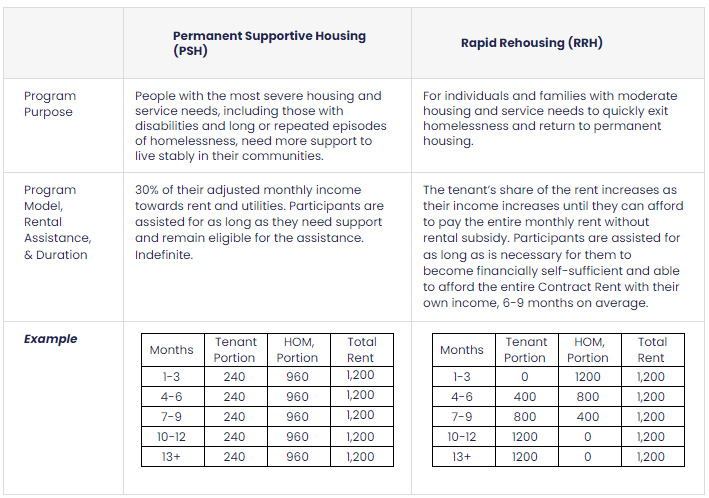
This chart shows the primary differences between Permanent Supportive Housing and Rapid Rehousing, including example rental payment amounts from both the tenant and the rental assistance administrator.
What These Housing Programs Have in Common
Despite their differences, Rapid Rehousing and Permanent Supportive Housing share several important characteristics.
Both are designed to help people move from homelessness into permanent housing in the community. Participants enter into leases and have tenant rights and responsibilities. Landlords provide the housing and maintain their responsibilities under the lease and applicable laws.
Both programs may also include rental assistance, property inspections, supportive services, and coordination among multiple organizations.
Most importantly, both approaches focus on creating a foundation for housing stability rather than simply providing a temporary place to stay.
The Roles Behind a Successful Tenancy
Housing programs work best when everyone involved understands their role.
Participants are responsible for following their lease, caring for their home, communicating about concerns, and meeting applicable program requirements.
Landlords and property managers provide safe, quality rental housing, maintain the property, fulfill their lease obligations, and communicate with participants and program partners when necessary.
Service providers work directly with participants to address barriers, connect them with resources, and support continued housing stability.
Housing program administrators oversee rental assistance and other program requirements, coordinate applicable housing processes, and help ensure the program operates according to its established guidelines.
Community stakeholders support the broader network of housing, services, resources, and partnerships needed to help people successfully exit homelessness.
Each has a different role, but their efforts ultimately intersect around a shared objective: helping create stable, successful tenancies.
Why Different Housing Programs Are Needed
There is no single path into or out of homelessness. Individuals and families have different circumstances, resources, barriers, and support needs.
Having different types of housing assistance allows communities to better match those needs with an appropriate intervention.
For some households, temporary rental assistance and short-term support may provide the foundation needed to regain stability. Others may benefit from long-term rental assistance combined with ongoing supportive services.
Understanding those differences helps participants, landlords, service providers, and other stakeholders better understand how housing programs work and the roles they play within them.
*Learn more about PSH and RRH on our Arizona Services page.
Frequently Asked Questions
What is the difference between Rapid Rehousing and Permanent Supportive Housing?
Rapid Rehousing generally provides time-limited rental assistance and services to help people quickly exit homelessness and establish housing stability. Permanent Supportive Housing combines long-term rental assistance with ongoing supportive services for eligible participants who may need additional support to maintain housing.
How long does Rapid Rehousing assistance last?
Rapid Rehousing is temporary, but the length and amount of assistance vary by program and household circumstances. Participants should consult their housing program or service provider for information specific to their assistance.
Is Permanent Supportive Housing permanent?
Permanent Supportive Housing does not have a predetermined time limit. Eligible participants may remain housed as long as they continue to meet applicable program requirements and comply with their lease.
How does rental assistance work in housing programs?
The structure varies by program. Participants may be responsible for a portion of the rent, with the housing program providing eligible rental assistance. Participant contributions and assistance amounts may change based on income, household circumstances, and program requirements.
What responsibilities do participants have in housing programs?
Participants are tenants and must follow their lease, care for their rental unit, communicate with their landlord, pay their required portion of rent, and comply with applicable housing program requirements.
What should landlords expect when renting to program participants?
Landlords can generally expect a traditional landlord-tenant relationship along with involvement from the housing program and, in some cases, a service provider. Depending on the program, this may include rental assistance, inspections, documentation, and communication with program partners.