
What Does a HOM Housing Specialist Do in a Day?
At HOM, the Housing Specialist role is not defined by a fixed routine, predictable schedule, or one-size-fits-all workflow. It is defined by people — participants navigating housing challenges, service providers offering support, and Housing Specialists working to bring every moving piece together.
At HOM’s Central Arizona office in Phoenix, nearly 20 Housing Specialists do that work every day. Alanna Damato and Alicia Padilla are two of them. They manage different programs, different caseloads, and different participant needs. But their work often intersects with the same demanding balance of urgency, coordination, detail, and care.
Here’s a closer look at how Housing Specialists balance the day-to-day reality of the role.
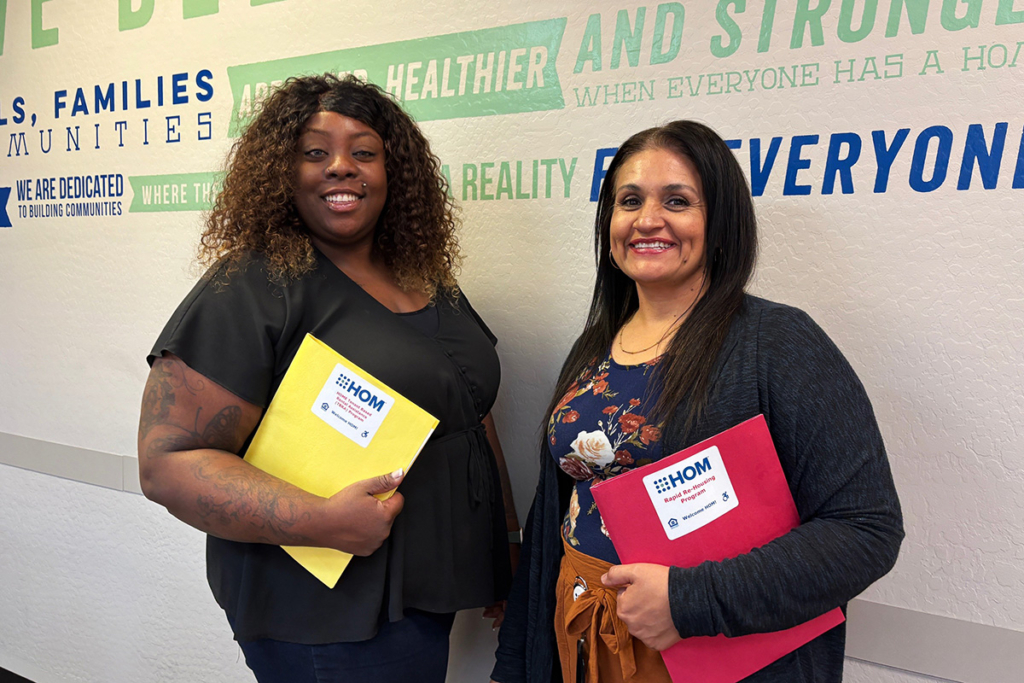
Housing Specialists Alanna Damato (left) and Alicia Padilla (right) support participants through every stage of the housing journey at HOM’s Central Arizona office.
The Day Starts Before the Day Starts
For both Alanna and Alicia, the Housing Specialist role begins long before any formal schedule kicks in. By the time they log in, messages are already waiting:
- A participant needs help with a lease issue.
- A recertification deadline is approaching.
- A case manager is following up on documentation.
Alanna, who joined HOM in 2021 and supports Community Bridges, Inc. (CBI) Permanent Supportive Housing (PSH), CBI Mesa Tenant-Based Rental Assistance (TBRA), and A New Leaf (ANL) TBRA programs, describes the pace simply:
“It’s not dull. It’s chaotic, but I thrive in chaos.”
That “chaos” comes from supporting participants navigating vastly different realities — homelessness, unstable living situations, domestic violence, substance use challenges, health concerns, or prolonged housing insecurity. Every participant arrives with different barriers, timelines, and needs.
Alicia, a HOMie since December 2024, manages ABC Supportive Housing participants with last names beginning with F and W. Her approach centers on communication, patience, and adaptability.
“You have to have thick skin,” she said, adding that the work requires patience, persistence, empathy, and the ability to read people and communicate effectively.
Participants may be overwhelmed by delays, navigating crises, or rebuilding stability after years of uncertainty. Housing Specialists balance compassion with structure — listening, explaining requirements, solving problems, and keeping the process moving forward.
Participants at Every Stage at Once
One of the most distinctive aspects of the Housing Specialist role is that there is often no single start-to-finish workflow happening in order. The role requires constant context switching — sometimes within minutes. At any given moment, Alanna and Alicia are managing participants at various stages of the housing process, such as:
- New referrals entering programs.
- Participants attending a program briefing and completing their intake.
- Individuals searching for housing.
- Pending Request for Tenancy Approvals (RFTAs).
- Participants preparing to move in.
- Long-term participants completing annual recertifications or interims, navigating housing challenges with care teams.
Alicia might be finalizing paperwork for a participant nearing lease approval while preparing a recertification packet for someone who has been housed for nearly a year. At the same time, Alanna may be reviewing rent calculations for one participant while troubleshooting a documentation issue for another.
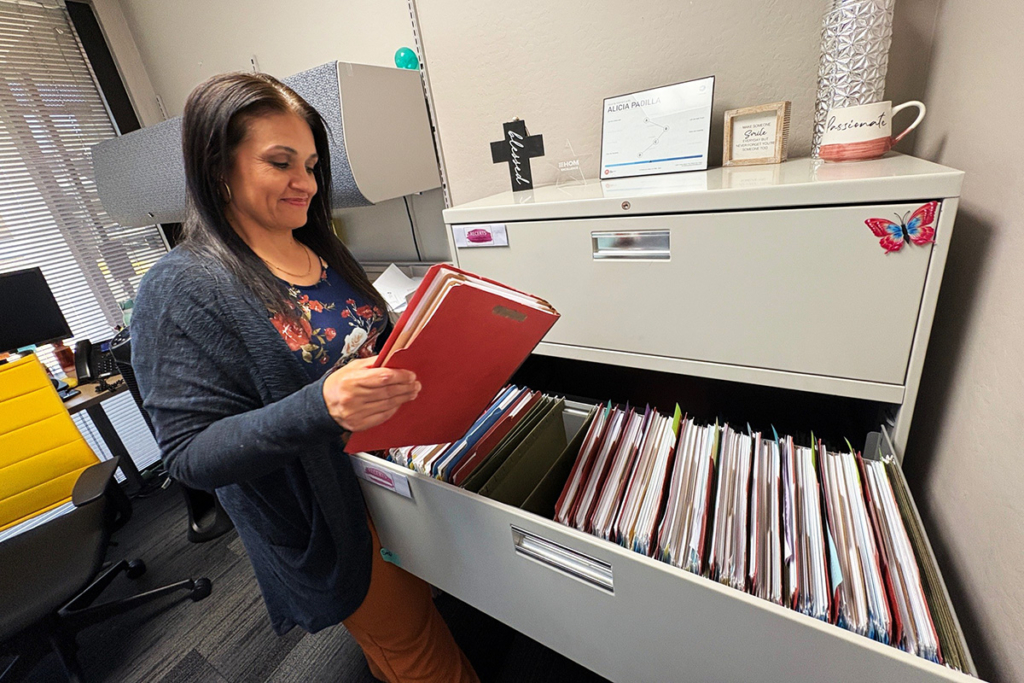
From organizing participant records to coordinating housing support, filing is just one of the many tasks Alicia manages as a Housing Specialist.
Technology That Gives Time Back
Managing the complexity of the Housing Specialist role depends heavily on the tools behind the work. Housing Specialists use Padmission Journey, the software for homeless housing assistance programs co-founded by HOM CEO Mike Shore in 2019. For Alanna and Alicia, one of its biggest advantages is practical: speed.
Both remember using HOM’s previous system, where building a move-in could take two to three hours. In Padmission Journey, the same process takes roughly 15 to 20 minutes.
That time matters. Less administrative work means more time available for participant communication, problem solving, and housing support.
“Journey has evolved so much,” Alicia said. “It’s so much easier to use.”
Another benefit is access. Because of HOM’s direct relationship with Padmission, Housing Specialists have direct access to the developers behind it. Alanna, Alicia, and HOM Housing Specialists in Arizona and California can share feedback from frontline housing work and sometimes see updates happen in real time. For a role built around shifting timelines, compliance requirements, and high-volume coordination, that responsiveness can make a dramatic difference.
The Human Side
By midday, the work often becomes immediate and deeply human.
Walk-ins happen. Phones ring. Emails stack up.
Participants may arrive with lease confusion, housing search barriers, anxiety about timelines, or requests for updates they have been waiting on. Alanna and Alicia both serve as direct points of contact at these moments.
Alicia says she leans heavily on clarity and communication, especially when participants are overwhelmed or unsure about the next steps. Her work often involves translating complex program requirements into something understandable and actionable.
Alanna added that it’s vital for participants to take ownership in the housing process:
“It’s your voucher, no one else’s. We’re here to get you housed and to help you stay housed.”
That mindset reflects a key part of the Housing Specialist role: balancing guidance with empowerment.
Housing Specialists also frequently communicate with case managers, clinical teams, landlords, property managers, and internal HOM teams supporting inspections, payments, or housing navigation.
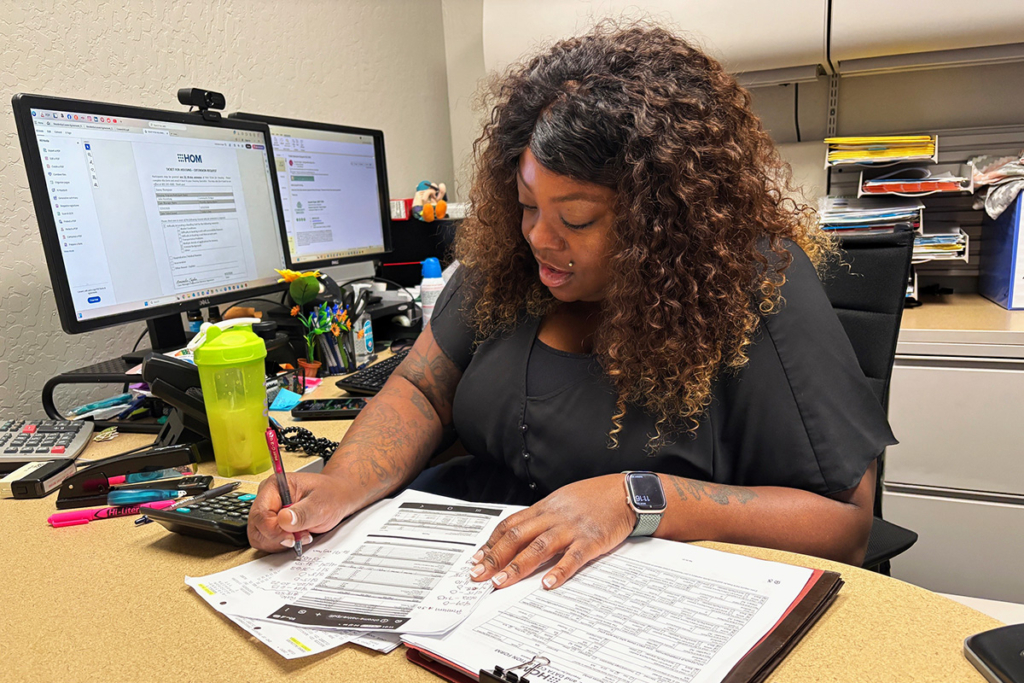
For HOM Housing Specialists like Alanna, coordinating housing resources also means managing the many details and documents behind the work.
The Challenges That Shape the Role
Despite the structure, both Alanna and Alicia point to a few consistent challenges.
Maintaining participant contact is one of them. Communication gaps can quickly delay timelines and disrupt yearly housing cycles.
Eviction-related processes are another. These situations are time-sensitive, emotionally heavy, and require careful coordination.
External turnover can create additional complications. When partner staff, case managers, property management personnel, or property owners change, Housing Specialists often must rebuild communication pathways, reestablish relationships, and clarify incomplete or inconsistent information.
These challenges are not exceptions to the work — they are part of the daily reality for Housing Specialists.
The Support Behind the Work
While the HOM Housing Specialist role involves complexity, urgency, and constant coordination, it is also deeply supported work — and that support shows up every day in meaningful ways.
But Housing Specialists don’t do this work alone. Across various programs and offices in Arizona and Los Angeles, there is a strong culture of collaboration where colleagues step in to problem-solve, share insights, and help each other move participants forward when timelines tighten or barriers emerge. Alanna and Alicia both experience this collaboration in different ways through their respective programs and caseloads, often relying on peer support and offering it in return as situations shift throughout the day.
HOM leadership is also actively present in the work. Supervisors and directors are accessible, responsive, and willing to roll up their sleeves when needed. Whether it’s helping resolve a complex case issue, supporting escalated housing situations, or removing administrative barriers, leadership plays an active role in ensuring Housing Specialists are not carrying challenges alone.
And beyond the systems and teamwork, the most meaningful part of the role is the impact itself. Alanna and Alicia see firsthand what stability can do for participants and their families — a signed lease after months of uncertainty, a successful move-in after repeated setbacks, or a long-term recertification that reflects sustained housing stability. These moments represent more than paperwork moving through a system; they represent real change in people’s lives.
Two Viewpoints, One Mission
While the day-to-day work of a Housing Specialist can vary depending on the program, participants, and caseload, the core mission remains the same. For Alanna and Alicia, that means coordinating complex processes, supporting participants, and helping create long-term housing stability.
Different day-to-day realities. Same commitment.
Every day brings something different, but the outcome remains the same: helping people stay housed, stay supported, and build lasting stability over time — reflecting HOM’s belief that individuals, families, and communities are safer, healthier, and stronger when everyone has a home.